AI in Trades: What It Means for Contractors in 2025
AI in trades is being used to automate scheduling, handle inbound calls, assist with diagnostics, generate quotes, and improve job-site safety training. For small contractors in HVAC, plumbing, and roofing, the biggest practical gains right now are in front-office automation — not field robotics. Field work still demands licensed, judgment-bearing humans.
The honest state of AI in the trades right now
The AI boom has sparked legitimate anxiety about job displacement in skilled trades. But the data tells a different story.
A Microsoft study ranked manual labor jobs as having lower AI applicability than knowledge work — meaning field trades are among the most protected sectors from automation. Geoffrey Hinton, the "godfather" of AI, has gone further: he's actively encouraged people to enter skilled trades as a hedge against AI displacement. That's not speculation. That's the world's leading AI researcher saying your work is safe.
What's actually happening in 2025 is augmentation, not replacement. According to Forbes, AI is enhancing workflows, safety, and training for electricians, plumbers, and carpenters — not removing them from job sites. The tools are solving friction: scheduling, lead qualification, safety compliance, diagnostic troubleshooting.
Morton Industries frames this clearly: "Integrating AI into skilled trades isn't about replacing people — it's about empowering them to do more with less friction, waste, or risk."
Here's what this means practically. AI in trades handles administrative work that pulls you away from billable hours. It flags safety hazards before they become problems. It speeds up diagnostics and scheduling. You spend less time on paperwork and more time doing what you were hired to do — and what no machine can yet replicate: the judgment, adaptability, and client relationship that defines skilled trades work.
The shortage of skilled tradespeople isn't getting smaller. Demand keeps climbing. AI tools that free up your time to focus on selling and delivering quality work don't threaten employment — they increase your capacity and profitability in an industry that's crying for trained hands.
Where AI is actually making a difference on the job
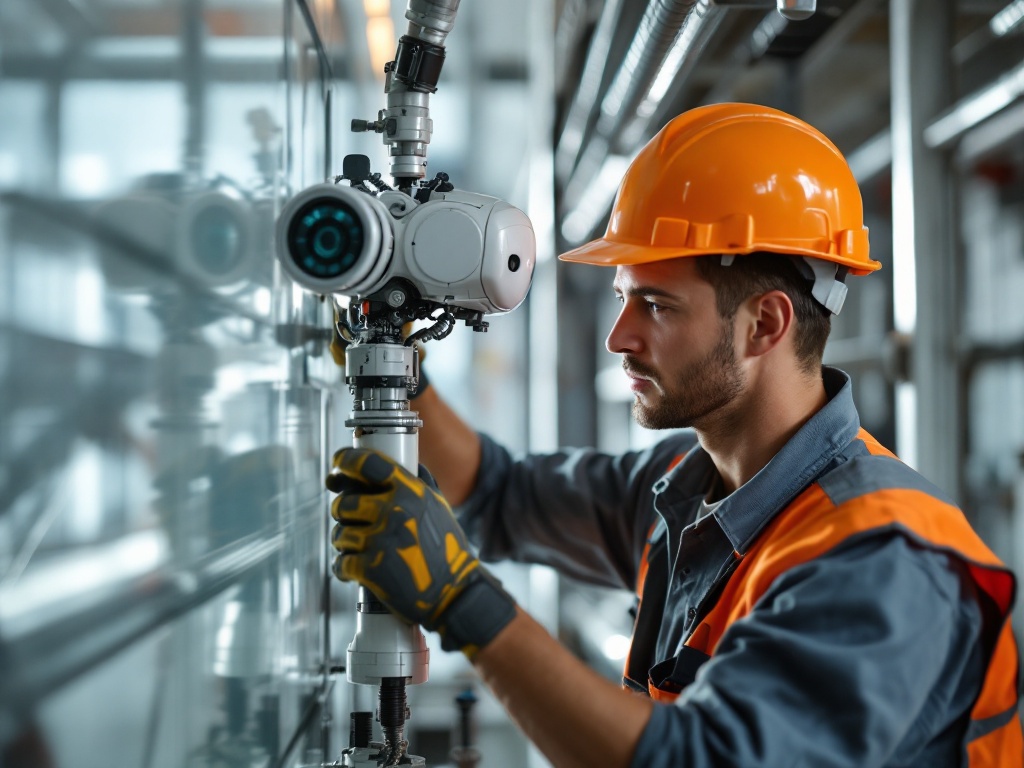
AI in trades is moving from theoretical to practical on job sites right now. These aren't distant possibilities — contractors are already deploying tools that cut labor time, catch problems early, and keep crews safer.
Diagnostics before arrival
HVAC technicians use AI-assisted diagnostic systems with networked sensors that flag refrigerant leaks, airflow anomalies, or compressor strain before a service call even happens. The system learns normal performance patterns for each unit, then alerts the tech when readings drift outside baseline. That means less guesswork on arrival, faster troubleshooting, and fewer repeat trips. Plumbers are seeing similar wins with water-quality sensors that detect mineral buildup or pressure drops automatically.
Faster, smarter estimating
AI-powered estimating tools pull live supplier pricing, labor rates, and material availability in real time. You input the job scope — roof pitch, square footage, material grade — and the software generates a competitive quote in minutes instead of hours. No more manual spreadsheets or stale pricing data. For contractors managing multiple crews, this speed directly impacts your ability to win work and manage cash flow.
Safety flags on site
Job-site image recognition systems scan live camera feeds to detect missing hard hats, unclipped fall protection, or unsecured equipment. The system alerts the foreman instantly — before an incident happens. According to CTE Learning, "AI enables tradespeople to work smarter, faster, and more efficiently — saving time and improving safety." This shift from reactive incident reports to proactive hazard flagging reduces worker injuries and liability exposure. Some contractors pair these tools with crew scheduling software to track compliance patterns across teams.
Training without live risk
Apprentices use AI-powered simulation training to practice fault-finding on virtual HVAC or electrical systems. They diagnose a refrigerant leak or trace a circuit fault without touching live equipment or wasting materials. The simulation adapts difficulty based on performance, giving each apprentice personalized ramp-up. You get faster-qualified techs; they gain confidence before handling real systems.
These tools aren't replacing skill — they're amplifying it. The contractor who adopts AI in trades compresses diagnostic time, reduces callbacks, and builds a safer operation. That's competitive advantage in 2025.
The front office is where small contractors feel it first
While AI's impact on field operations gets headlines, the real money-making opportunity for small contractors is sitting in the front office right now.
The missed-call problem is costing you jobs. A typical HVAC or plumbing shop with 1–15 employees operates with thin office coverage. Techs are in the field. The owner is managing the schedule, running calls, or on a job site. When a homeowner calls during service hours — or after hours — that call rings into a void. It goes to voicemail. It goes unanswered. It goes to a competitor who picked up.
This isn't a nice-to-have problem. Lead response time is one of the strongest predictors of whether a homeowner will book your services. A 60-minute delay cuts callback rates in half compared to a 5-minute response. Most small shops can't guarantee an answer in that window when their entire team is mobile.
AI voice receptionists solve this without hiring. Instead of bringing on office staff — a salaried position, benefits, payroll taxes, workspace — you deploy an AI system that answers calls 24/7, qualifies the caller, books appointments, and sends quotes automatically. No training. No turnover. No desk to rent.
According to Forbes, home-services businesses are seeing measurable ROI in back-office automation before any field-level changes take hold. The reason: front-office bottlenecks are still manual.
Onexe is built specifically for this use case. It's the AI voice receptionist for home-services contractors — answering inbound calls, qualifying leads, booking appointments, and sending quotes while you're on the tools. The system learns your service area, pricing, availability, and dispatch logic. When a call comes in, it handles the entire intake. No missed opportunities. No lag between ring and response.
For a 1–15-person shop, this is where AI in trades moves the needle fastest:
- Eliminate after-hours call loss — capture leads calling nights and weekends
- Cut response lag — from hours to seconds
- Free up owner time — stop managing inbound, start growing the business
- Scale without headcount — handle 10x the inbound volume with no new staff
The front office is where small contractors feel AI first because it's where the friction already exists. Field work still requires skilled hands. Dispatch still requires judgment. But answering calls and booking appointments? That's been waiting for automation for years.
Will AI replace trade workers? The straight answer
No, AI won't replace trade workers. Here's why: the work you do requires physical dexterity, contextual judgment, and liability-bearing decisions that machines cannot handle in the real world. Not today, not in 2025, and not in the foreseeable future.
The data backs this up. According to Condustrial, experts project AI will reshape 50–60% of employment categories — but skilled trades are among the most resilient. A Microsoft study cited on LinkedIn explicitly ranked manual labor jobs as having lower applicability with AI. Even Geoffrey Hinton, the "godfather" of AI, has acknowledged that physical skilled work sits outside AI's natural domain.
What's actually happening is the opposite. According to PTT Education, the advent of AI will not eliminate the need for humans in skilled trades — training and job openings have increased, not decreased. The AI boom is driving demand for electricians and construction workers as data centers, EV infrastructure, and grid upgrades accelerate across the country. More infrastructure means more work for humans with hands-on expertise.
"AI may change the tools people use, but it cannot replace the knowledge, judgment, and precision that skilled workers bring to the trades." — JTech
This distinction matters. A tool can measure load-bearing capacity or flag electrical code violations. But diagnosing why a foundation is cracking, deciding which repair approach fits a 1940s-era home, or troubleshooting an HVAC system mid-winter in a customer's living room — these demand the contextual reasoning and accountability that only humans provide.
If you're worried about staying relevant, focus on the tools AI in trades is actually creating. Smarter diagnostics, faster quoting, better scheduling — these are becoming standard. That's where contractors gain a competitive edge, not where jobs disappear.
How to start using AI in your contracting business today
Start with your phone system. Most small contractors lose 20–30% of leads because calls go to voicemail or take too long to answer. According to Forbes, AI-powered call handling is one of the fastest ROI wins in trades. Onexe plugs directly into your existing phone number and answers inbound calls 24/7, qualifies leads, books appointments, and sends quote requests — all without hiring a receptionist or touching IT infrastructure. Setup takes under an hour. Cost runs $200–400/month for most 1–15 person shops. This alone typically recovers missed jobs worth thousands.
Next, automate your follow-ups. Use ChatGPT, Claude, or similar tools to draft email responses to leads, job descriptions for crew postings, or Google Business Profile updates. Zero training curve. Five minutes of prompting replaces 20 minutes of writing. Free tier works fine at your scale.
If you're in roofing or HVAC, invest $50–100/month in AI takeoff and estimating software. These tools reduce quote time from 1–2 hours to 15–30 minutes per job. The time savings compound fast: three quotes per week equals 6–9 hours freed monthly.
Skip these for now:
- Field robotics or autonomous equipment (ROI doesn't land until 20+ employees)
- Custom AI platforms requiring developers or IT consultants
- Enterprise software bundles you'll never use
Start with call automation, move to email drafting, then layer in estimating tools if they fit your trade. Each step solves a real bottleneck without overcomplicating your business. Track what saves the most time or money — that guides your next investment.
Start with the problem AI actually solves for your business
The contractors winning right now aren't the ones with the fanciest tech stack. They're the ones closing leads faster than their competitors can even answer the phone.
According to Forbes, AI in skilled trades isn't about replacing your hands — it's about freeing your time. The gap between AI-adopting and non-adopting contractors will widen over the next 2–3 years, not because of automation anxiety, but because of operational reality: who answers the phone faster, qualifies leads more consistently, and gets quotes in the customer's hands while they're still thinking about the job.
That structural advantage compounds. A contractor using AI in trades to capture and respond to inbound calls within minutes captures leads that a manual-process shop loses to competitors. Those wins stack across seasons.
Here's the contractor-smart approach: Pick one AI tool. Solve one real problem. Measure the result. Don't chase the whole toolbox. If your bleeding point is missed calls and slow response times, start there. If it's quote turnaround, focus on that. Track the numbers — how many calls answered, how many quotes sent, how many booked — and let data drive your next move.
The contractors who move first on the right problems will have trained teams, locked-in lead flow, and operational muscle that's hard to replicate. Those who wait will feel the difference in their pipeline and margins.
Ready to see what faster lead response looks like? Book a demo of Onexe — the AI voice receptionist built for contractors who can't afford to miss calls.
Frequently asked questions
Will AI replace skilled trade workers like plumbers and electricians?
No — not in any near-term timeframe. Trades requiring on-site physical judgment, tool handling, and liability-bearing decisions are among the least automatable jobs. Multiple experts, including AI pioneer Geoffrey Hinton, have pointed to skilled trades as a smart career hedge against AI displacement. Demand for tradespeople is rising, not falling.
What is AI actually being used for in HVAC and plumbing right now?
In HVAC, AI in trades is used in smart diagnostic systems, predictive maintenance sensors, and automated scheduling software. In plumbing, AI tools assist with estimating and customer communication. The most widely adopted AI tools for small shops right now are front-office: call handling, appointment booking, and quote generation.
How can a small contractor with no tech background start using AI?
Start with one specific problem — typically missed calls or slow quoting. AI voice receptionists require no technical setup beyond forwarding your existing phone number. AI estimating tools have simple interfaces built for contractors. You don't need a developer or IT staff to get started with most contractor-focused AI tools available today.
Is AI making the labor shortage in trades worse or better?
Better, in most ways. AI in trades automates the administrative and scheduling work that doesn't require a license, freeing skilled workers to focus on billable field work. It also supports apprentice training through simulations. The AI infrastructure boom is simultaneously driving new demand for electricians and construction workers.
What AI tools are most useful for roofing contractors specifically?
Roofing contractors get the most value from AI-powered aerial measurement and takeoff tools (which eliminate manual roof measuring), AI estimating software that prices jobs using live material costs, and AI call-handling tools that capture leads from storm-damage inquiries around the clock — including nights and weekends when homeowners often first notice damage.
How does AI in trades affect job safety?
Positively. AI-powered job-site cameras can detect missing PPE, flag fall hazards, and alert supervisors in real time. AI training simulations let apprentices practice fault-finding on virtual systems before working on live equipment. According to CTE Learning, safety improvement is one of the strongest demonstrated benefits of AI adoption in the trades.
Are there any downsides to using AI as a contractor?
Yes — the main risks are over-relying on AI for customer communication (which can feel impersonal if poorly configured), paying for tools that don't fit your workflow, and wasting time evaluating platforms instead of running jobs. The fix: solve one specific problem with one tool, measure results over 60–90 days, then decide whether to expand.