
AI Receptionist for Roofers: What It Does and Why It Works
An AI receptionist for roofers answers every inbound call 24/7, qualifies the lead (leak, storm damage, or re-roof), captures contact and insurance details, and books an inspection — all without a human on the other end. It handles simultaneous storm-surge calls that a single office staffer never could.
Why Roofing Contractors Miss More Calls Than Almost Any Other Trade
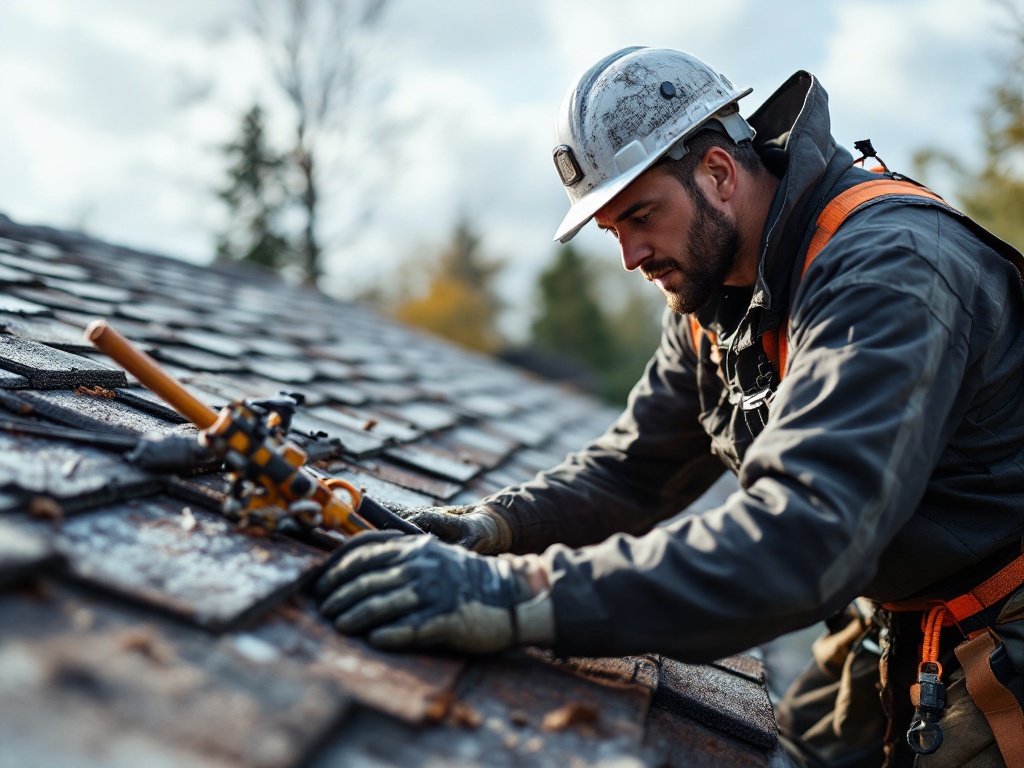
Roofing contractors face a conversion problem that cuts deeper than most trades. A missed call in roofing isn't a minor inconvenience—it's a direct hit to revenue. A full roof replacement runs $10,000–$20,000 or more. One lost lead can wipe out weeks of marketing spend and operational overhead.
The core issue is structural to the work itself. Roofers spend their day where they can't answer phones: on pitched roofs, 30+ feet up, balancing safety and precision. A contractor can't take a call mid-shingle, and neither can their crew. Small roofing operations often run lean—one office person, maybe two—handling bids, scheduling, permits, and payroll. When the phone rings during a site visit or a bid walkthrough, it goes to voicemail. That prospect calls the next roofer on Google instead.
Storm events compound the problem instantly. After a hail or wind event, a single roofing contractor can receive 50–100 inbound calls within 24–48 hours. Solo operators and two-person offices can't physically answer them all. According to AgentZap's roofing solutions guide, AI agents can "answer 100+ storm surge calls at once, capture insurance details, and dispatch crews instantly"—a capacity that human receptionists simply can't match.
This isn't theoretical. According to Roofing Contractor magazine's October 2025 analysis, "Voice AI agents built for home services offer a more efficient, reliable way to convert inbound calls into confirmed appointments." The math is simple: answer the call, qualify the lead, book the inspection, capture the insurance claim number. Ignore it, and a homeowner moves to your competitor.
The gap between calls received and calls answered is where roofing contractors leak revenue. Answering every call—24/7, during storms, during roof work—requires infrastructure most small operations don't have.
"Voice AI agents built for home services offer a more efficient, reliable way to convert inbound calls into confirmed appointments." — Kevin Wu, Roofing Contractor magazine (October 2025)
What an AI Receptionist Actually Does on a Roofing Call

When a homeowner calls a roofing contractor about a leak or storm damage, an AI receptionist for roofers answers immediately—not a voicemail box. Here's exactly what happens during the call.
The greeting and initial triage. The AI answers with your company name and asks what brings the caller in. Within seconds, it listens for keywords: "leak," "storm," "hail," "wind," "insurance claim," or "estimate." This triage logic sorts calls into four buckets:
- Active leak. Caller hears: "I'm connecting you with our emergency line" or gets scheduled for same-day inspection if available.
- Storm damage. Call routes to a detailed insurance capture workflow.
- Insurance claim follow-up. System asks for claim number and adjuster details.
- Routine estimate. Standard scheduling flow without urgency flags.
According to AgentZap, AI receptionists for roofing can "handle 100+ storm surge calls at once" while capturing insurance details in real time—critical when a hailstorm hits and twenty homeowners call within an hour.
Address and contact capture. The AI asks for the property address, confirms it, and collects a callback number. It repeats both back to ensure accuracy. No typos, no second calls asking "What was that address again?"
Insurance questions for storm damage. This is where roofing-specific intelligence matters. If the caller mentions a storm:
- "Do you have homeowners insurance?"
- "What's your insurance carrier?"
- "Do you have an active claim number?"
- "Has an adjuster visited your property?"
These details land directly in your system so your crew arrives prepared.
Inspection scheduling. The AI checks your calendar and offers available time slots: "Our next opening is Thursday at 10 a.m. or Friday at 2 p.m. Which works?" Once the caller confirms, the inspection is booked directly onto your calendar—no callback required. According to Smith.ai, this appointment-booking capability means "estimate visits are scheduled without your team lifting a finger."
The entire call takes three to five minutes. The homeowner hangs up with a confirmed time. Your crew gets a full work order with address, contact info, issue type, and insurance carrier (if applicable) before they ever step on the truck.
Storm Surge: The Roofing-Specific Problem AI Handles Better Than Humans
When a hailstorm or hurricane hits your service area, your phone becomes a lifeline—and a liability. A single weather event can generate dozens of calls within hours, often arriving after 5 p.m. on a Friday or overnight when your office is closed.
The math of missed calls is brutal. A solo roofer who misses just 15 storm calls in one evening at an average job value of $8,000 each has left $120,000 on the table. That's not a slow month—that's a catastrophic loss of revenue because no one answered.
A human receptionist, even a part-time hire, can answer one call at a time. If calls arrive faster than they can respond, the rest ring through to voicemail. By the time you call those prospects back the next morning, they've already booked someone else. According to AgentZap, their AI system handles 100+ storm surge calls at once—a capacity no part-time employee can match.
Why storm events expose the human limit:
- Calls arrive in unpredictable bursts during nights, weekends, and holidays
- Homeowners are panicked and need immediate acknowledgment, not voicemail
- Timing is everything—the first contractor to answer often wins the job
- Insurance details must be captured accurately for each caller
- Inspection slots fill fast; booking must happen in real time
Dialzara's AI handles storm surges, captures insurance details, and books inspections 24/7—meaning every caller gets a response, every detail gets recorded, and every available inspection slot gets filled automatically. Your team wakes up to a full schedule, not missed opportunities.
An AI receptionist for roofers removes the bottleneck entirely. When the next storm hits, calls don't compete for a single line. They're answered simultaneously, qualified in seconds, and insurance information is logged before your crew even sees the leads. No more watching revenue walk out the door because the phone rang too many times at once.
How Roofing Contractors Are Using AI Receptionists Right Now
Roofing contractors across the US are already integrating AI receptionists for roofers into their operations—and the adoption patterns reveal exactly why they're gaining traction.
Real-world setup is friction-free. Contractors plug the AI receptionist directly into their existing phone number. No new lines. No rewiring the office. A solo operator or small crew can have 24/7 call handling live within hours. This plug-and-play model is why grassroots adoption is accelerating: it removes the barrier to entry that traditional answering services created.
The Hearth case study offers concrete proof of value. According to Hearth's March 2026 case study, one roofing contractor captured every inbound call—including those that arrived when the office was closed or the crew was on-site. The AI screened calls, qualified leads, and booked estimates without a human in the loop. For roofers operating on storm surge cycles or seasonal spikes, this means zero missed opportunities during peak demand.
Pricing makes it accessible. Smith.ai's roofing service starts at $95/month for 30 calls, providing a low-risk entry point. Contractors aren't committing to expensive contracts or long-term staffing overhead.
Community feedback signals real adoption. A Reddit thread in r/RoofingSales documented a solo builder testing an AI answering service for roofing calls. The thread drew practitioner-level feedback—not marketing speak—from contractors already running these systems. Common wins included:
- Answering after-hours emergency calls during storm season
- Capturing insurance details and claim information automatically
- Booking initial inspections without manual follow-up
- Reducing missed calls from crews in the field
The pattern is consistent: contractors aren't replacing office staff. They're extending their capacity during unpredictable demand spikes. Learn more about how AI receptionists integrate with your workflow, or review Onexe pricing to see the investment for your operation.
What to Look for When Choosing an AI Receptionist for Your Roofing Business
Picking the right AI receptionist for roofers means matching the tool to how your business actually operates—especially during storm season when you're fielding dozens of calls at once.
Core Roofing Requirements
Your system must handle concurrent calls. According to AgentZap, a capable platform should process 100+ simultaneous storm-surge calls without dropping a single lead. If a vendor can't guarantee this, you'll lose business during the exact moment you need to capture it most.
Insurance detail capture is non-negotiable. The AI should ask for and record the homeowner's carrier, policy number, and date of loss without manual prompts. Dialzara's platform specifically mentions capturing insurance details as a built-in function—this saves your team hours of data entry and ensures nothing slips through during callbacks.
Storm-damage triage scripting separates adequate systems from purpose-built ones. Ask vendors: "Can I customize the call script to route insurance claims differently than retail jobs?" Your AI receptionist for roofers should know the difference and ask different follow-up questions for each.
Integration and Operational Must-Haves
- Existing phone number compatibility. Your AI should take over your current number—no switching digits mid-stream.
- Calendar and CRM sync. Booked appointments land directly in your scheduling tool. No double-entry.
- 24/7 availability. Storms don't call during business hours. Your receptionist shouldn't either.
- Transparent pricing with no long-term contracts. Month-to-month terms let you test before committing.
Critical Vendor Questions
-
What happens when the AI hits a question it can't answer? Does it escalate to a human? Record the message for you to handle? A gap here creates lost leads.
-
How does setup work? If your team isn't technical, the onboarding process must be simple. An AI voice receptionist for roofers like Onexe handles calls, qualifies leads, books appointments, and sends quotes—but only if you can configure it in under an hour.
-
Can I test this without a multi-year commitment? Reputable vendors offer trial periods. Use them.
Real-world adoption hinges on ease and results, not features. Choose a platform that lets you customize for roofing workflows, integrates with tools you already use, and proves it can handle your peak season load.
Is an AI Receptionist Worth It for a Small Roofing Operation?
The math is simple: one roofing job covers months of AI receptionist costs.
Most residential roof replacements run $8,000–$15,000 depending on scope and region. Entry-level AI receptionist plans start at $95–$109 per month. If your small crew (1–10 people) answers 40 calls per week and typically close 1 in 8 leads, an AI receptionist for roofers that captures just one additional qualified lead per month pays for itself and then some.
Here's the breakdown:
- Average job value: $10,000 (midpoint)
- AI receptionist cost: $100/month
- Payback threshold: One lead per month
- Your profit margin: Typically 15–25% on roofing jobs = $1,500–$2,500 per job
That single captured lead doesn't even require you to close at a higher rate—it's a call you would have otherwise missed because you were on a job site, in an attic, or on the roof. According to Smith.ai's roofing answering service, their system handles calls 24/7 and books estimate visits directly, meaning you don't lose leads after hours or during peak season.
Real-world scenario: During spring and storm season, when call volume spikes, many small roofing crews run phones to voicemail while crews are booked solid. An AI receptionist working overnight or weekends can qualify callers, capture insurance details, and schedule inspections without your intervention—then alert you to the booking.
The honest limitation: An AI receptionist answers the phone and qualifies the lead. It is not a replacement for your estimator or sales process. Your crew still needs to visit, measure, quote, and close. The AI opens the door; your team walks through it.
For seasonal roofing businesses, the ROI is sharpest during high-volume months. Off-season? The low monthly cost ($95–$109) stays manageable, and you retain round-the-clock availability.
Bottom line: If your crew closes even one extra job annually from captured calls alone, the service has already justified its existence—and the barrier to entry is so low that testing it for a month or two carries minimal risk.
Ready to Stop Missing Roofing Calls?
Storm season doesn't wait for you to hire staff. Every missed call during peak season is a lost roofing job—and a homeowner calling your competitor instead.
Onexe answers every inbound call 24/7, qualifying leads, capturing insurance details, and booking estimates while you're on the roof. No voicemail tag. No callbacks lost in the noise. According to AgentZap's roofing deployment data, AI receptionists handle 100+ simultaneous storm surge calls and dispatch crews instantly—exactly what you need when hail hits your service area.
Setup takes minutes. Your existing phone number stays the same. Calls route to Onexe. You control how it answers, what questions it asks, and where appointments land in your calendar or job management system.
Try Onexe free—no long-term contract. See how it handles your call volume during the next weather event. Most roofers add their first estimate booking within the first week.
Frequently asked questions
Can an AI receptionist handle insurance-related roofing calls?
Yes. AI receptionists built for roofing can ask callers for their insurance carrier, claim status, and adjuster contact information during the initial call. This pre-qualifies storm-damage leads before you ever pick up the phone, saving time on follow-up and filtering out non-serious inquiries.
What happens if a caller asks something the AI doesn't know?
Most AI receptionist platforms handle unknown questions by offering to take a message, promising a callback, or escalating to a human if one is available. You configure the fallback behavior during setup. The AI should never guess on technical questions like pricing or code compliance.
How does an AI receptionist handle a storm surge — dozens of calls at once?
Unlike a human receptionist who handles one call at a time, an AI receptionist runs parallel sessions simultaneously. Platforms like AgentZap cite handling 100+ concurrent calls. Every caller gets answered immediately, not sent to voicemail, which is critical when competing roofers are also getting called.
Will homeowners know they're talking to an AI?
Modern AI voice receptionists sound natural and conversational, but disclosure practices vary by platform and state. Some contractors prefer their AI to identify itself upfront; others don't. Check your platform's default behavior and consider local regulations — some states have disclosure requirements for automated calls.
Does an AI receptionist work with my existing phone number?
Yes. Most AI receptionist services route calls through your existing business number using call forwarding. You don't need a new number or new hardware. Setup typically takes under an hour, and you can configure it to forward only when you're unavailable or always-on for 24/7 coverage.
How much does an AI receptionist for roofers cost?
Pricing typically starts between $95 and $109 per month for entry-level plans — Smith.ai starts at $95/month for 30 calls; AgentZap starts at $109/month. Higher tiers scale with call volume. For a roofing business averaging $10,000+ per job, one captured lead pays for many months of service.
Can the AI book roofing inspections directly on my calendar?
Yes, provided your AI receptionist integrates with your calendar tool (Google Calendar, Outlook, or a field-service app). The AI checks availability in real time and books the inspection slot during the call. The homeowner gets a confirmation; you see the appointment without making a single callback.
Is an AI receptionist good enough for a solo roofer, or is it just for larger companies?
AI receptionists are arguably most valuable for solo operators and small crews — the people least able to hire a full-time office staffer. If you're on a roof six hours a day and can't answer calls, an AI receptionist for roofers is the most cost-effective way to ensure every inbound lead gets a live response.